WEDDING PLANNING · DALLAS–FORT WORTH
Dallas–Fort Worth Wedding Reception Timeline: A DJ & MC Guide
By Andres · Spin Eventz · November 2, 2026
Quick answer
Start with one shared cue sheet. A five-hour reception can include guest arrival, grand entrance, dinner, toasts, special dances, open dancing and the exit. Your DJ, planner, venue and photographer should agree on who cues each moment.
A memorable Dallas–Fort Worth reception needs more than a playlist. The venue, planner, photographer and DJ all have to know when a moment begins, who makes the announcement and what happens next. This guide gives you a practical five-hour example and a short cue sheet to customize with your own team. It is a planning example, not a promise that every wedding should follow the same clock.
A five-hour sample reception timeline
6:00–6:30 p.m. · Guest arrival. Welcome music sets the mood while guests find their seats or move from cocktail hour. Confirm whether the DJ is covering this period and where microphones are needed.
6:30–6:45 p.m. · Grand entrance and welcome. Give the MC the exact names and pronunciation of each person being introduced. Decide whether the couple enters before or after the wedding party, and ask the photographer to be ready at the entrance.
6:45–7:45 p.m. · Dinner. Keep the soundtrack at a level where guests can talk. The planner and caterer should tell the DJ when plates are being served so announcements do not interrupt service.
7:45–8:45 p.m. · Toasts and spotlight dances. Put speakers in a clear order and check the wireless microphone before dinner ends. The first dance, parent dances and any cultural traditions can follow, but the couple should choose the order that feels natural.
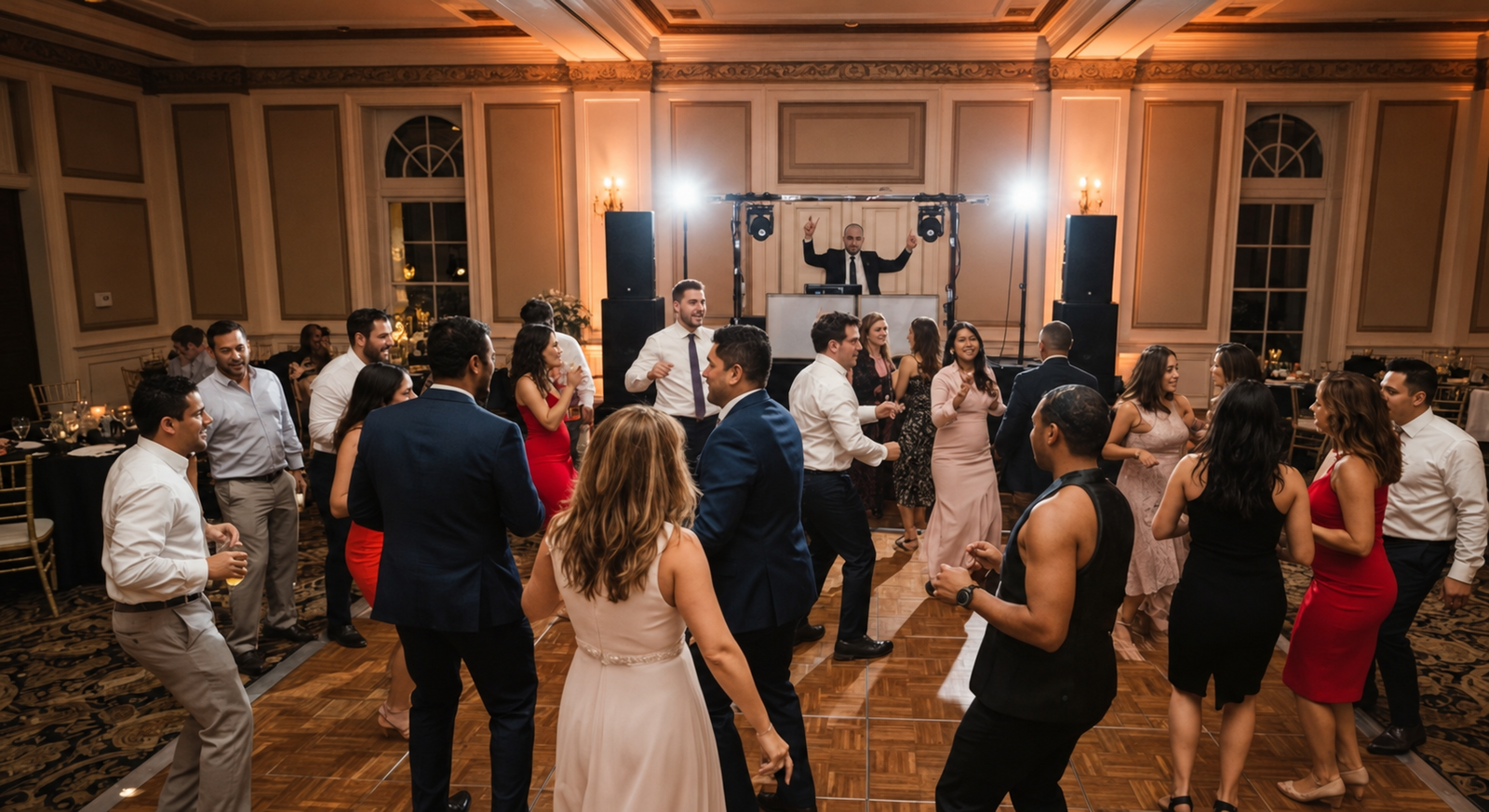
8:45–10:45 p.m. · Open dance floor. Start with music that invites several generations in, then let the DJ read the room. Plan any cake cutting, bouquet moment or surprise performance so it does not repeatedly stop the floor.
10:45–11:00 p.m. · Last song and exit. Tell the DJ whether you want a final group song, a private last dance or a formal send-off. Confirm the venue's end time and the planner's exit cue well before guests are on the floor.
Who owns each announcement and cue?
Put one person in charge of the final timeline. Usually that is the planner or designated venue lead. The DJ/MC then executes the approved music and announcements, while the photographer, videographer and caterer receive the same cue sheet. A five-minute check-in before each major transition prevents the common problem of announcing a moment before the room is ready.
For a bilingual celebration, decide which announcements should be in English, Spanish or both. Share phonetic pronunciations for names, the wording for family traditions and who can approve any last-minute change. A Dallas–Fort Worth wedding DJ and MC can help shape that flow during planning.
Build a music brief, not a rigid playlist
Give your DJ a short list of must-play songs, a do-not-play list and the exact edits for entrances, dances and the last song. Also describe the feeling you want at different points: elegant dinner, family-friendly opening set, then higher energy later. This leaves room for the DJ to respond to your guests without guessing about your priorities.
If ceremony audio is part of the day, map it separately from reception coverage. Note the ceremony location, processional and recessional cues, officiant microphone, power and the person who will signal each entrance. Confirm which services are included in your proposal before assuming one sound setup covers both rooms.
Place the photo booth around the big moments
A photo booth works best when guests can find it without leaving the celebration entirely. Opening it during cocktail hour or dinner gives early arrivals something to do; keeping it available during open dancing captures a different energy. Avoid scheduling the attendant's busiest moments during toasts or the first dance, when everyone should be watching the couple.
If you are considering a Dallas–Fort Worth photo booth, ask whether you want digital sharing, prints or both, and confirm its footprint and power with the venue. The booth and DJ can complement each other when their placement and service windows are planned together.
Confirm the venue details before you lock the schedule
Before you finalize the schedule, ask the venue for its load-in window, room changeover time, power locations, sound restrictions and required end time. Share the floor plan with your DJ and confirm where guests will see the dance floor. If the ceremony, cocktail hour and reception are in different spaces, list each sound location on the cue sheet.
The cue sheet to send every vendor
One-page cue sheet: event date and venue contact · DJ start/end time · ceremony and reception locations · exact introduction names · toast order · special dances and song versions · bilingual wording · booth service window · final song and exit cue. Give the same version to every vendor; update it once rather than sending separate changes.
Frequently asked questions
How early should the DJ receive the final timeline? Share a working version as soon as key moments are chosen. Send the final names, songs and cue order in the window agreed with your DJ and planner, then designate one onsite person for day-of changes.
Does a five-hour reception need five hours of dancing? No. The service window can include guest arrival, introductions, dinner, toasts, dances and the final exit. Ask for a proposal that matches the actual coverage you need.
Can the DJ also handle ceremony audio? It can be added when the ceremony setup, microphones and location are confirmed. Treat it as a separate requirement in your planning conversation so the equipment and staffing are clear.
Build the schedule around your actual spaces
A timeline that looks comfortable on paper can become rushed when guests must move between a ceremony site, cocktail area and reception room. Mark every room change and estimate how long it takes for the last guest to arrive, not just the first. Give your planner and venue a clear cue for opening the doors, then let the MC announce the next moment when the room is ready. The same principle applies if portraits, the bar and the photo booth are on different levels.
Ask where the DJ can set up for each part of the day. A microphone that covers toasts in the ballroom may not cover an outdoor ceremony, and the ideal speaker placement may change when the room opens for dancing. If your DFW venue has a strict load-in window or sound cutoff, place those constraints on the cue sheet before you choose the start and end of service. This helps your proposal reflect the real work rather than a generic timeline.
Keep guests engaged without overprogramming
A strong reception has rhythm. Guests need time to eat and talk, but long gaps without a clear next moment can drain the energy. Put formalities into one or two purposeful windows and tell the DJ which announcements are truly needed. If dinner service runs late, move a flexible activity before compressing a toast or dance that matters to the couple. The planner, caterer and photographer should agree on any change so no one is surprised.
For a bilingual crowd, choose the language of each announcement based on who needs the information. A welcome might be in both English and Spanish; a personal family toast may be most meaningful in one language. The DJ can keep introductions concise, pronounce names correctly and help guests follow the flow without translating every sentence twice. Share the exact names, preferred wording and any tradition the family wants explained before the reception.
When should you plan extra coverage?
A five-hour sample is useful for planning, but the right length depends on your ceremony, dinner service, guest count and venue end time. If you expect a long cocktail hour, multiple family dances, an extended meal or a late-night exit, ask whether those moments fit inside the quoted DJ window. It may be better to schedule coverage deliberately than to discover on the event day that the final dance falls after service ends.
Ask for the included hours and overtime rate in writing. Also ask whether ceremony sound, a second room or a photo booth has a separate service window. If you add photo booth coverage in Dallas–Fort Worth, decide whether it opens during cocktail hour, dinner or open dancing; its best schedule may be shorter than the DJ's. Your goal is a clear, coordinated plan for each service, with enough flexibility for real people and real events.
PLAN YOUR RECEPTION
Start with the date and the venue.
Tell us when and where you are celebrating, plus the moments you want to protect. We can discuss DJ and MC coverage, bilingual announcements, ceremony audio and booth timing in one conversation.
Schedule a Free ConsultationPLAN YOUR CELEBRATION
Make every transition feel effortless.
Tell us your date, venue and the moments that matter most. We can shape a reception plan around your guests, music and preferred DJ and photo booth services.
Check Your DateSERVING TEXAS
Wedding DJs across Texas
Explore wedding DJ and bilingual MC services in your city.
Austin wedding DJ · San Antonio wedding DJ · Dallas–Fort Worth wedding DJ · Houston wedding DJ · All Texas service areas
Related reading: Texas wedding reception timeline · DJ or live band? · Candid event photography tips